Battery Storage Solutions
Battery storage systems allow homes and businesses to store electricity for use when it is needed most. Whether storing solar energy generated during the day or charging batteries during cheaper overnight tariffs, battery systems provide greater control over energy usage and costs.
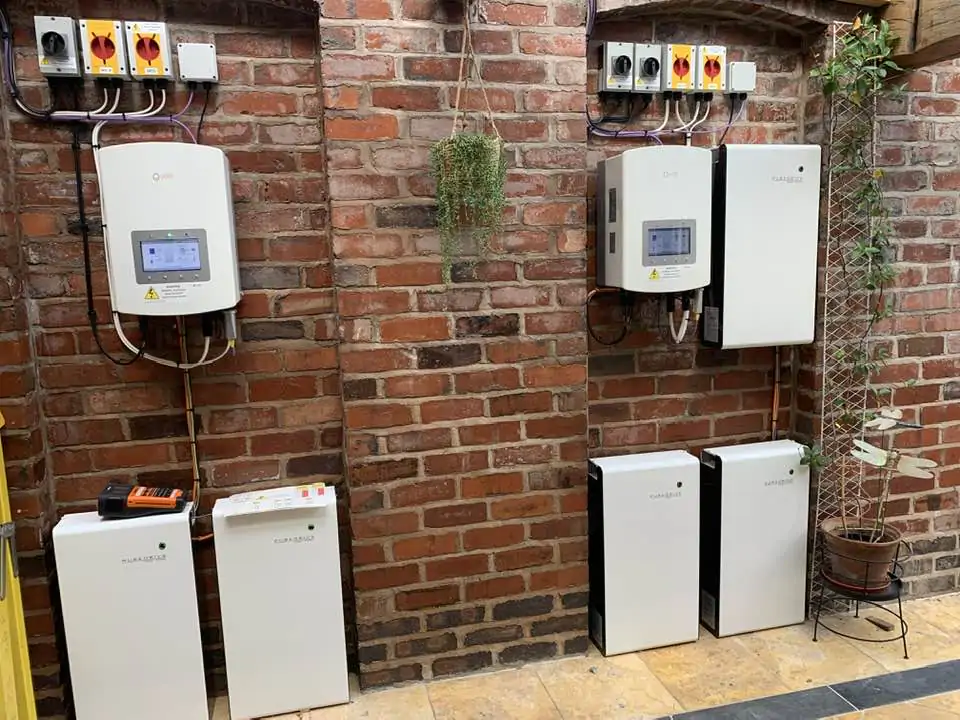
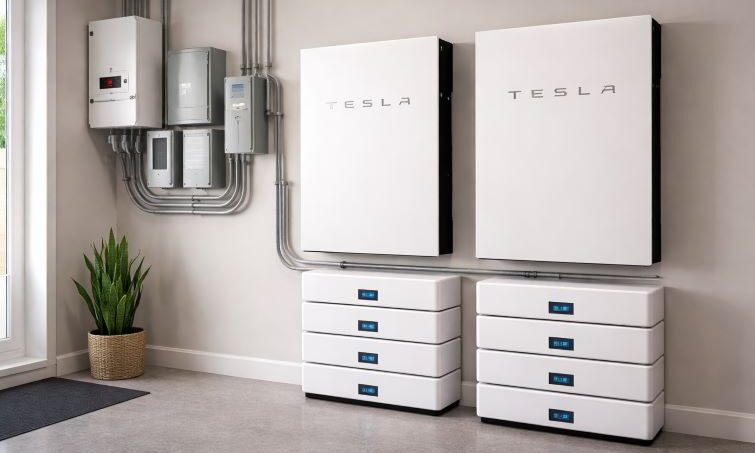
Spectra Solar installs a range of battery storage solutions suitable for both new solar installations and existing solar PV systems.
Battery Upgrades for Existing Solar Systems
Many properties already have solar PV systems installed, particularly systems installed during the Feed-in Tariff (FiT) years. These systems can often be upgraded by adding battery storage without needing to replace the existing solar inverter.
This is commonly referred to as a battery upgrade.
An AC-coupled battery system works alongside the existing solar installation. It monitors the electricity flow at the property and detects when excess solar energy is being exported to the grid. Instead of allowing this surplus electricity to leave the property, the system diverts it into the battery for storage.
The stored energy can then be used later when demand within the property is greater than the solar production, helping to increase self-consumption and reduce reliance on grid electricity.
Hybrid Solar & Battery Systems
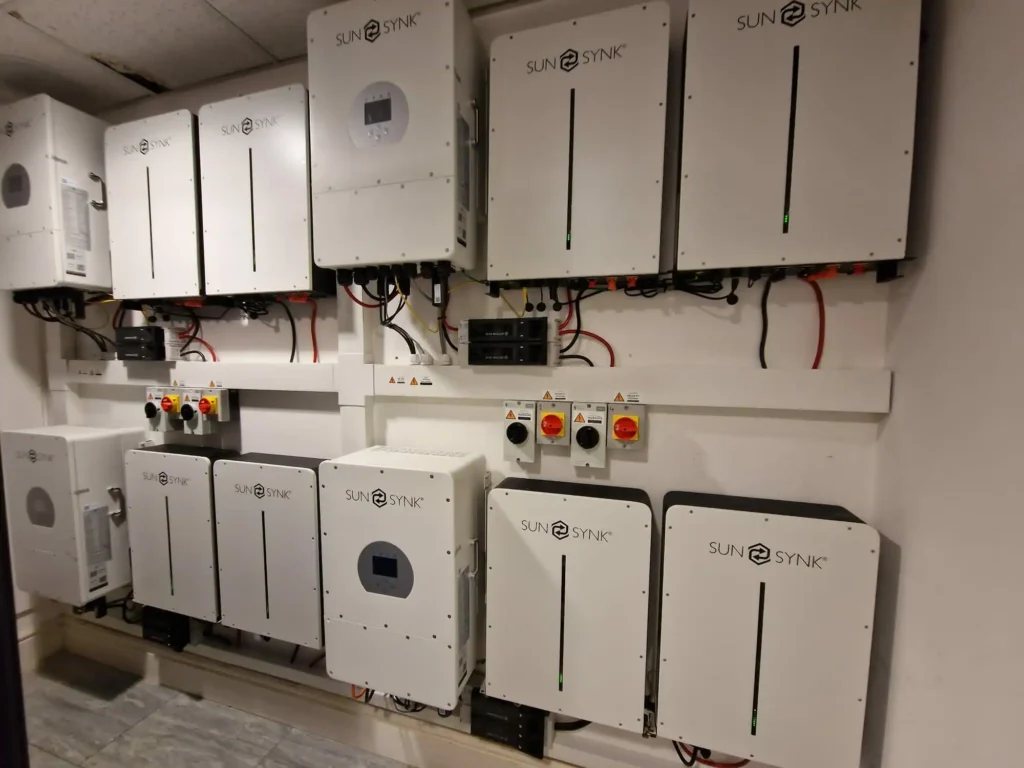
A hybrid inverter system is typically installed as part of a new solar installation or during a full system upgrade. Hybrid systems combine solar generation and battery storage into one integrated solution.
Solar panels connect directly to the hybrid inverter, which also connects to the battery storage system. Hybrid systems operate in a similar way to AC-coupled systems by storing excess solar generation in the battery for later use.
However, hybrid inverters also include multiple solar input ports, allowing the solar panels to connect directly into the inverter. This integrated design allows the system to manage solar generation, battery charging, and grid interaction all from a single device.
Hybrid systems are commonly installed where both solar panels and battery storage are being installed together.
System Monitoring & Energy Apps
Modern solar and battery systems include monitoring platforms that provide full visibility of system performance.
These apps allow users to track:
- Solar generation
- Battery charging and discharging
- Grid import and export
- Overall system performance in real time
Monitoring provides clear insight into how energy is being generated, stored, and used within the property.
Overnight Charging & Smart Tariffs
Battery systems can also take advantage of off-peak electricity tariffs, where electricity is cheaper during certain overnight hours.
Charging batteries overnight using these tariffs allows homes and businesses to run on lower-cost electricity during the day. When combined with solar generation during daylight hours, this can significantly reduce overall energy costs.
Increasing Solar Self-Consumption
Battery storage significantly increases the amount of solar energy that can be used within the property.
Without battery storage, excess electricity produced during the day is usually exported to the grid. With batteries installed, this energy can be stored and used later in the evening when demand is higher.
This increases the overall efficiency of the system and improves the long-term financial benefits of solar.
Can I Use My Battery if the Grid Goes Out?
Yes — and no.
Most standard grid-connected battery systems automatically shut down during a power outage. This is a safety requirement designed to prevent electricity from being exported back onto the grid while engineers may be working on power lines.
However, it is possible to use your battery during a power cut if the system is installed with additional equipment such as:
- A backup gateway
- A changeover switch
- A backup / essential loads board
These components allow the system to safely isolate your property from the grid and continue powering selected circuits in your home or business using the battery and solar panels.
Backup capability is not always included as standard with battery systems, but it can often be added depending on the equipment being installed.
There is more detailed information about battery backup systems and how they work during power outages in the guides section of our website.

How Much Battery Storage Do I Need?
This is one of the most common questions customers ask. The correct battery size depends on how much electricity the property uses and how that usage changes throughout the year.
When calculating battery storage requirements, your annual household electricity usage should not include EV charging consumption. Electric vehicles use a large amount of electricity and including this in the calculation can significantly distort the figures.
In most cases, home batteries are not designed to charge electric vehicles. Charging a battery with another battery is inefficient and quickly depletes the home storage. EVs are typically charged directly from solar generation during the day or from cheaper overnight grid tariffs.
If EV charging consumption is included in the annual usage figures, it can result in the battery system being massively oversized, leading to unnecessary cost and storage capacity that may never be properly used.
How We Estimate Battery Size
At Spectra Solar, battery sizing is usually estimated using the property’s annual electricity consumption, which is then split into two seasonal profiles:
- 60% for winter
- 40% for summer
This is because energy usage and solar generation vary significantly between seasons.
During the winter months:
- Solar generation is lower
- Days are shorter
- Batteries have fewer opportunities to charge from solar
- Households typically use more electricity as people spend more time indoors
During the summer months:
- Solar generation is higher
- Days are longer
- Batteries are more likely to charge fully
Household electricity demand is often lower
So What Size Battery Should You Choose?
There are usually a few sensible options.
One option is to size the battery to cover winter usage as much as possible.
Another option is to choose something in the middle which can provide a good balance between cost, performance, and year-round use.
The key point is that bigger is not always better.
Installing too much battery storage can mean part of the battery rarely gets used properly. If a battery is oversized for the property, it may not complete full charge and discharge cycles often enough, leaving expensive storage capacity sitting there unused for much of the year.
Avoid Oversizing
What you do not want is to install far more battery storage than the property realistically needs.
An oversized battery can:
- Cost more than necessary
- Spend long periods only partially used
- Deliver poorer value for money
- Reduce the practical return on investment
Battery storage should be sized to work efficiently with the property, not simply made as large as possible.
Modular Battery Systems Make This Easier
The good news is that the majority of battery systems are modular, meaning extra storage can usually be added later if required.
This gives customers more flexibility.
In many cases, it can make more sense to install slightly less battery storage to begin with, then monitor how the system performs over the first 12 months. If more storage is needed, an additional battery can often be added later without a huge extra cost compared with the overall installation.
This can be a better option than overspending upfront on storage that may never be fully used.
Manufacturer Battery Sizes Also Affect the Decision
Another factor is that battery manufacturers only produce certain battery sizes, which means the ideal required size does not always match the products available.
For example:
- A property may require 12kWh of usable storage
- But the manufacturer may only offer a 9.5kWh unit or a much larger combined storage option
This can make battery selection less straightforward, because the next size up may provide more storage than the property is likely to use efficiently for large parts of the year.
That can result in excess storage capacity sitting unused not just during summer, but sometimes during winter too.
The Best Approach
In many cases, the best approach is to choose a battery size that is:
- Large enough to make a meaningful difference
- Small enough to cycle properly and work efficiently
- Flexible enough to expand later if needed
That is why Spectra Solar looks at battery sizing based on real usage patterns rather than simply selling the biggest system possible.
If you are unsure what battery size is right for your property, Spectra Solar can help assess your annual consumption and recommend a system that fits your usage, budget, and future plans.
Visit Our Showroom
Customers are welcome to visit the Spectra Solar showroom to see fully operational solar and battery systems in action. Seeing the equipment working in real time and speaking directly with the team helps customers better understand how different system types operate and which setup may be most suitable.